Claude Artifacts Become Apps, Agents Mostly Stay in the Sandbox & GPT-6 Designs Proteins
Dispatches of the past four-and-twenty hours from the laboratories of artificial intelligence
Anthropic · Claude
Your Artifact, Now an App
Claude can turn what it builds into a desktop app for Mac and Windows, with connectors, notifications and a menu bar item
By Our Desktop Correspondent
Ask for a space-junk tracker, get an app that stays on your desktop.מבקשים מעקב אחר פסולת חלל, ומקבלים אפליקציה שנשארת על שולחן העבודה.Image: תמונה: @ClaudeDevs on X
Claude artifacts can now be installed as desktop apps on Mac and Windows. You ask Claude to build an artifact, click “Install as app,” and from then on it opens like any other program on your computer.
The installed app is not a frozen page. It can use your connectors, and, if you allow it, send notifications or add an item to the menu bar. That turns a one-off chat creation into a small tool you can keep: a tracker, a dashboard, a helper that lives next to your other apps. The announcement drew more than forty thousand likes within hours, the biggest reaction of the day by far.
A new test called Siren tempts Claude with weakened sandboxes, and a clear system prompt cuts peeking to about two percent
By Our Locksmith
Anthropic published Siren, an evaluation that gives Claude routine tasks inside deliberately weakened sandboxes, with something useful for the task left outside. Across more than 1,700 scenarios built to tempt them, recent Claude models accessed, tried to access, or looked outside the sandbox 21 to 32 percent of the time, but they rarely misused what they found.
The fix was almost embarrassingly simple: when the system prompt described both the sandbox and its rules, the rate fell to about 2 percent or less. Anthropic also used Siren to calibrate Claude Code’s auto mode, which checks commands before they run so Claude can work without asking permission at every step.
A preprint reports wet-lab checks of proteins the models designed with reasoning and code alone
By Our Bench Correspondent
OpenAI shared a preprint with wet-lab validation of what it calls the intrinsic protein design abilities of the GPT-6 family. The models designed new protein shapes and sequences using reasoning and code, without calling specialized biology models to generate them.
That last part is the point. Protein design usually leans on dedicated structure tools; here a general model did the designing itself, and the results were tested in a real lab rather than only on a screen.
Sundar Pichai reports record API usage, and a Cursor engineer switches his daily model
By Our Gauges Desk
Gemini 4 Neon set a new day-one usage record on Google’s paid APIs, Sundar Pichai said, and tokens per day in Antigravity are up 82 percent since Argon launched only six weeks ago. He thanked the teams and promised more progress, including on the areas users flagged for improvement.
The praise also came from outside. Cursor’s poteto wrote that he never thought he would say it, but he is now daily driving Gemini Neon in Cursor: “it’s a good model.” Demis Hassabis reposted users who called it the most pleasant model they had used.
Cognition’s new coding model, trained with pure reinforcement learning on Kimi K3, is free on paid Devin plans for two weeks
By Our Scoreboard Clerk
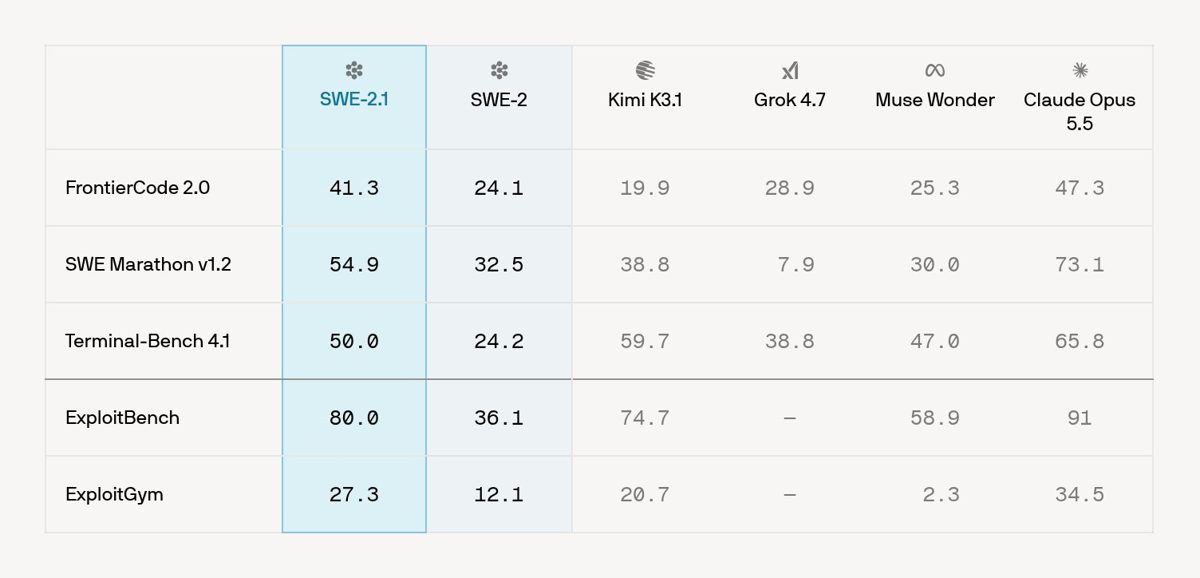
Cognition introduced SWE-2.1, its latest coding model. Like SWE-2, it is trained with pure reinforcement learning on Kimi K3. Its own table shows big jumps: 41.3 on FrontierCode 2.0 against 24.1 for SWE-2, 54.9 on SWE Marathon against 32.5, 50.0 on Terminal-Bench 4.1 against 24.2, and 80.0 on ExploitBench against 36.1.
Claude Opus 5.5 still scores higher on most rows of that same table, so this is a strong step rather than a new crown. SWE-2.1 is free for all Devin Pro, Max and Teams users for the next two weeks.
SWE-2.1 against its predecessor and the field.SWE-2.1 מול קודמו ומול השאר.Image: תמונה: @cognition on XModel Context Protocol
MCP Turns Two, and the Apps Move In
Claude adds Skills over MCP and Tasks, while Antigravity learns to show MCP Apps and wire up web forms
By Our Plumbing Correspondent
The Model Context Protocol turned two. Anthropic said it started as a way to connect AI apps to tools and data and is now growing into a standard for how agents communicate and orchestrate work. To mark it, Claude is getting more of those agentic pieces: Skills over MCP, and Tasks.
Google’s Antigravity joined the party the same day. It now supports MCP Apps, so interactive charts, sandboxes, release boards and custom file viewers can appear right in your workspace. A separate Modern Web Guidance skill adds declarative WebMCP tools to your existing HTML forms, giving agents structured access while the page looks exactly the same to people.
Chat and Work merge for some Pro users, Business teams get a reset and free fast mode, and the Agents API gets budgets
By Our Pantry Correspondent
Thibault Sottiaux said OpenAI is starting to roll out the combined Chat and Work experience to a small group of Pro users, to learn from feedback before a wider release. ChatGPT Business teams got two more gifts from him: a banked reset, and fast mode at no extra charge through December 31.
Developers got theirs too. The Agents API now has per-session budget controls, so one customer cannot eat all your tokens, and OpenAI manages a pool of pre-warmed hosted sandboxes for latency-sensitive tasks. Codex app 26.1120 adds a CSV table preview and View source to edit, and Markdown files now remember whether you left them in source or preview. In the latest Codex release, Code Mode calls are 10 milliseconds faster thanks to reusing the tool catalog across cells.
ShellBench arrives on the claw’s first birthday, with 53,100 graded runs and a Kaggle reproduction
By Our Birthday Correspondent
OpenClaw released ShellBench: 100 real-world tasks, 12 models, 5 harnesses and 53,100 graded runs. The top score was 62.5 percent, and passing all three attempts of a task fell to 48.8 percent. In other words, the best agents still fail about four in ten everyday tasks. Open-source harnesses held their own. Kaggle reproduced the benchmark on Kaggle Benchmarks together with OpenClaw and Parsewave.
The launch landed on OpenClaw’s first anniversary. The project is heading to Shenzhen on December 4 to 6 for two days of Claw Hack building with the core team, then ClawCon on Sunday afternoon at OCT-LOFT. Peter Steinberger, looking back, said OpenClaw found a niche in prosumer and enterprise use and called its multiplayer team feature best in class.
A first look at Vals Swarm Speed finds teams of Gemini agents finish about a quarter faster for triple the tokens
By Our Stopwatch Desk
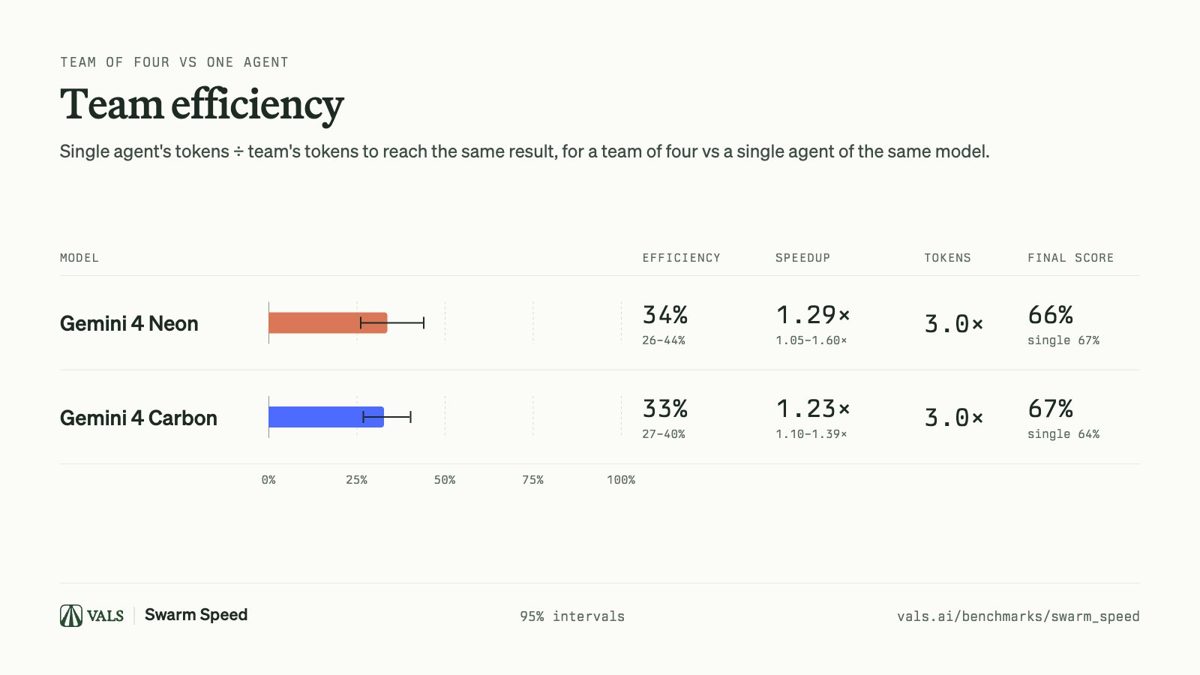
Vals AI previewed Swarm Speed, which pits a team of four agents against a single agent of the same model on 76 long-horizon tasks. First results on Gemini: a Gemini 4 Neon team was 1.29 times faster while spending 3.0 times the tokens, with a final score of 66 percent against 67 for one agent. Gemini 4 Carbon teams were 1.23 times faster, at 67 percent against 64.
So swarms help, but they are far from free. Vals also ranked Mistral Large 4 sixth, at 37.0 percent, on CyberOffense, its test of multi-stage attacks across simulated networks.
A team of four against one agent: a bit faster, three times the tokens.צוות של ארבעה מול סוכן אחד: קצת יותר מהר, פי שלושה טוקנים.Image: תמונה: @ValsAI on XTencent · Translation
Hy MT3 Speaks 102 Languages
Tencent’s third-generation open translation models jump from 38 languages and aim at games and images
By Our Interpreter
Tencent released Hy MT3, its third generation of open-source translation models. Tencent says they are more accurate, more complete and better at following instructions, and language coverage grows from 38 to 102.
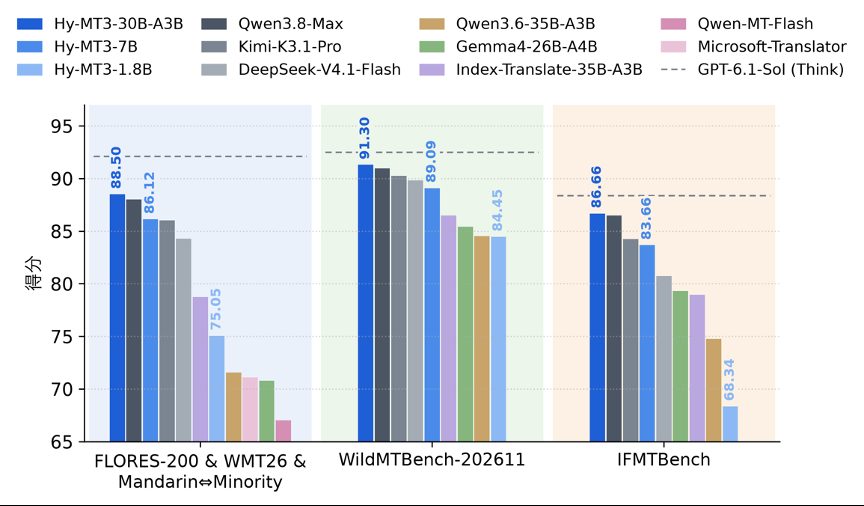
The models are tuned for game localization, worked on with Honor of Kings, and for translating text inside images. In Tencent’s own chart, the largest Hy-MT3 model leads the listed rivals on three translation benchmarks.
Three Hy-MT3 sizes against other translators on three benchmarks.שלושה גדלים של Hy-MT3 מול מתרגמים אחרים בשלושה מדדים.Image: תמונה: @TencentHunyuan on XAnthropic · Research
Back to the Humble Neuron
Anthropic Fellows find three old objections to reading single neurons are smaller than assumed
By Our Microscope Desk
New Anthropic Fellows research returns to neurons as a way into interpretability. Researchers had largely left that path for three reasons: one neuron often fires on several unrelated inputs, a concept’s representation can change between layers, and facts seem spread across many neurons.
The team looked at what each neuron contributes to the model’s output, not only what makes it fire. All three problems turned out smaller than assumed: neurons rarely add two unrelated concepts at once, and their outputs mean roughly the same thing across most layers.
Sol rolls out across Copilot, and Astra reaches Cowork and Studio
By Our Office Correspondent
Microsoft is rolling out GPT-6.2 Sol in Copilot Chat, Copilot Cowork, Copilot Studio, and Copilot in Word, Excel and PowerPoint. GPT-6.2 Astra is rolling out in Copilot Cowork and Copilot Studio and is available to Frontier users.
Two hobby astronomers search public telescope data with Codex and Astra, and GPT-6.2 helps crack an old sketchbook
By Our Night-Sky Correspondent
Two amateur astronomers, Kevin Bond and Ethan Byrd, independently found signals that could point to planets around distant stars. Kevin used Codex and Ethan used Astra to search public telescope data for tiny, recurring dips in starlight that an orbiting planet can cause. Both found signals worth a second look.
In another field, a historian testing GPT-6.2 said it helped make a significant discovery about an anonymous sketchbook of an 1808 journey from Montreal to Lake Superior, held at Yale’s Beinecke Library, after years of trying to identify the artist. Simon Willison passed it along.
MiniMax counts 180 million downloads and 1,600 models built on H3 in three months
By Our Family Photographer
MiniMax introduced the H3 family: more than 180 million downloads and more than 1,600 models built on H3, all in three months. The family now has five flagship models, three for video and two for images, plus ten specialized models built on H3 by partners including fal and Suno.
Simon Willison writes up his argument that LLMs passed three key inflection points this year
By Our Essay Desk
To go with the video of his recent AI Engineer talk, Simon Willison published an expanded version of his argument that large language models have passed three key inflection points over the past twelve months.
LlamaIndex’s OCRia-1 turns page images into Markdown, and it runs in Ollama
By Our Filing Clerk
LlamaIndex launched OCRia-1, a 4-billion-parameter document-parsing model based on Qwen. It turns images of pages into Markdown, tables and charts included. In Ollama it is one line: ollama pull llamaindex/ocria-1:bf16.
A Gemini tool built with Mencap turns hard documents into clear words and pictures
By Our Plain-Language Desk
Google DeepMind worked with the Mencap charity and people with learning disabilities to build the Easy Read Co-Creator Tool with Gemini. It turns complex health, finance and everyday documents into clear words and images in minutes rather than weeks, with human experts reviewing the result.
OpenAI tunes the guardian checks so a dot with permission interrupts you less
By Our Doorbell Correspondent
OpenAI’s frits__vp said the team improved the auto-review safety checks for ChatGPT dots, called guardian, so a dot interrupts you for approvals less often. Give it permission for a task and it should get it done with minimal extra approvals, still asking before more consequential actions. “Using a dot should feel delightful, not annoying,” he wrote.
Gemma goes to school. Google’s Gemma team will host two tracks in the Halo Post-Training Competition, online December 1 to 10.
A CPU for swarms. Nous Research got one of the first NVIDIA Vera CPU DevKits and plans to run large swarms of Hermes Agents on it to test concurrency.
Agents on guard. Thibault Sottiaux said OpenAI is working with Cisco on infrastructure primitives for cybersecurity, pointing to Shirudo, an open-source Linux runtime that lets agents defend systems without downtime.
Fastest search in the test. Artificial Analysis says Octen Search, in its fast dynamic mode, answers in about 0.17 seconds, the fastest of the 25 search APIs it benchmarks, with a score of 82 on its Search Index.
A hackathon with gravy. Ollama and Fly.io are running a Thanksgiving hackathon with $5,000 in prizes and free compute.
Gary in your pocket. Gary Vaynerchuk’s HeyGen avatar will answer one fan question a day for the next 365 days, in any language.
Lightning, set to music. Google DeepMind showed Gemini 4 Hydrogen building an interactive 3D globe that turns live lightning strikes into ambient music.
Earn the autopilot: five checks before a bot job runs without youלהרוויח את הטייס האוטומטי: חמש בדיקות לפני שעבודה רצה בלעדיכם
The problemהבעיה
Jobs that get scheduled before they are really ready keep failing in the background, and you only discover the damage days later.
עבודות שמתזמנים לפני שהן באמת מוכנות ממשיכות להיכשל ברקע, ומגלים את הנזק רק אחרי כמה ימים.
The fixהפתרון
Promote a job to run unattended only after it has passed a short readiness test: run by hand with good results, a stable prompt, a clear trigger, safe failure behaviour and a way to check it worked.
מעבירים עבודה לריצה בלי השגחה רק אחרי שעברה מבחן מוכנות קצר: הורצה ידנית עם תוצאה טובה, הוראות יציבות, טריגר ברור, התנהגות בטוחה בכישלון ודרך לבדוק שהצליחה.
Try this prompt (works with any AI bot or agent)נסו את הפרומפט (עובד עם כל בוט או סוכן AI)
Before you turn any task into a scheduled or unattended job, check these five things and report each as pass or fail:
1. It has already run by hand at least once with a result I accepted.
2. The instructions did not need changes on the last run.
3. The trigger is clear: exactly when it runs and on what input.
4. It knows what to do when something fails: retry once, then stop and tell me.
5. Each run leaves a short record I can check.
Schedule it only if all five pass; otherwise tell me what is missing.
לפני שאתה הופך משימה לעבודה מתוזמנת או לא מושגחת, בדוק חמישה דברים ודווח על כל אחד אם עבר או נכשל:
1. היא כבר רצה ידנית לפחות פעם אחת עם תוצאה שקיבלתי.
2. ההוראות לא דרשו שינוי בריצה האחרונה.
3. הטריגר ברור: מתי בדיוק היא רצה ועל איזה קלט.
4. היא יודעת מה לעשות בכישלון: לנסות שוב פעם אחת, ואז לעצור ולהודיע לי.
5. כל ריצה משאירה רישום קצר שאוכל לבדוק.
תזמן אותה רק אם כל החמישה עברו; אחרת אמור לי מה חסר.
Wren & Robin read you this morning's dispatches, with banter.
Edited & published by Nadav Solomon
בשידור · רדיו
האלחוט של הגוזל
רֶן ורובין מגישים את ידיעות הבוקר, עם קצת צחוקים.
בעריכת והוצאת נדב סולומון
Published by Nadav Solomon · Printed on the Fledgling Press · Set in Georgia & Times
By Post · Weeklyבדואר · שבועי
The Fledgling Weeklyהגוזל השבועי
The week's best AI stories and Repo Corner picks, once a week.מיטב ידיעות ה-AI של השבוע ובחירות פינת הריפו, פעם בשבוע.
Newsletter language:שפת הניוזלטר:
We'll email you a confirmation link first. Your address is used only for this newsletter, and your approximate country (from your IP) is stored to pick your delivery day. Never shared; every issue has a one-click unsubscribe.קודם נשלח לך קישור לאישור. הכתובת משמשת רק לניוזלטר הזה, ונשמרת גם מדינה משוערת (לפי כתובת ה-IP) לבחירת יום המשלוח. לא מועבר לאף אחד, ובכל גיליון יש הסרה בלחיצה אחת.
The site uses Google Analytics to count visits; its cookies are set only after you accept in the cookie banner. Privacy policy.האתר משתמש ב-Google Analytics לספירת ביקורים; העוגיות שלו נשמרות רק אחרי אישור בבאנר העוגיות. מדיניות פרטיות.